

Sign or Symbol
In the beginning was the Word
THE THOUGHT: Bird, bicycle, city, fire, pony
Sarah Beth Spraggins
The Objective correlative, a phrase T.S. Eliot used to refer to “a set of objects, a situation, a chain of events which shall be the formula of that particular emotion,” is connected to a desire to communicate. The math of poetry involves normal arithmetic and mystical formulas. Both are absolute. This is how the world works!
A good poem is as reliable as a good clock. What “11 O’Clock” means to you is not what it means to me. But it has a meaning that relates to both. The clockmaker deals with the science of things. The reader does not.
That’s why we react strongly (in a negative way) to lyricism that is botched or an obvious farce. A good example of this would be the shitty excerpt I read of Olivia Nuzzi’s book. A lie could be static but not harmonious, or have too much sameness, where you’re flooded with just that one thing.
In her book Dreaming by the Book, critic Elaine Scarry writes about the importance of motion, contrast, disappearances and intrusions in convincing a reader of a scene. The chapter about “Radiant Ignition” begins this way:
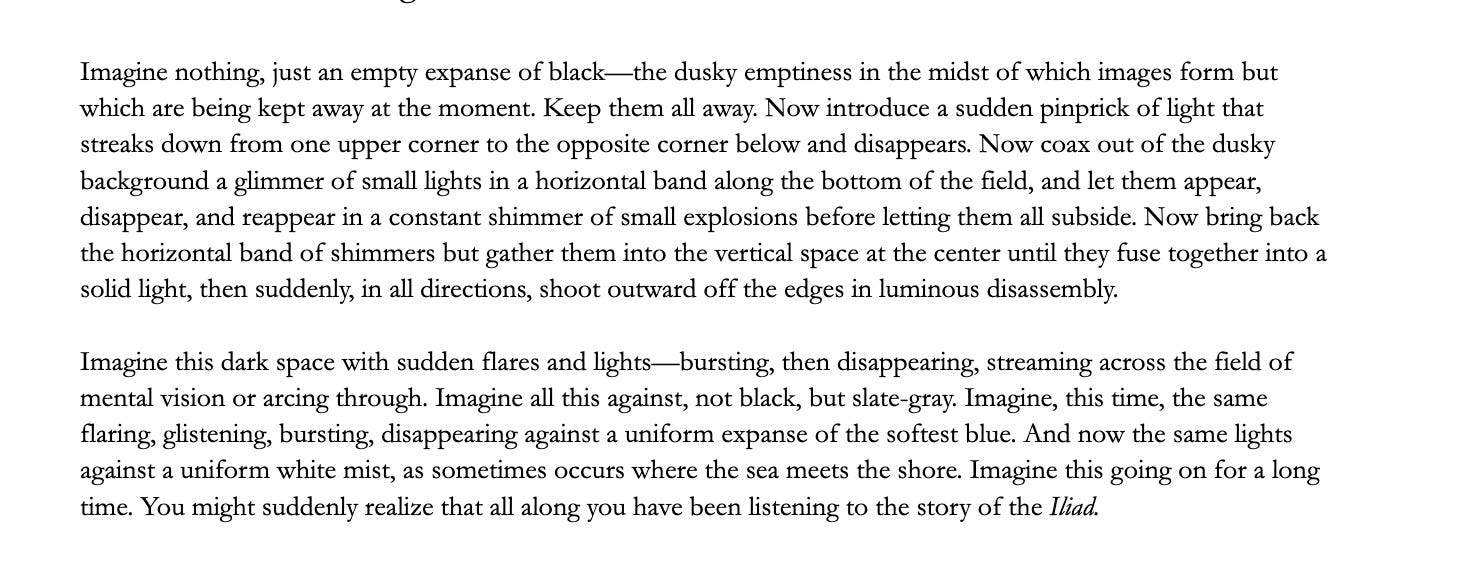
In a later chapter, Scarry explains how even in the much more static world of Madame Bovary, pictures move in the mind of the reader with ease. In order for them to be movable, Flaubert makes them light. These “filmy motions in our minds enable us to create a dense, solid surface beneath,” she writes.
I have talked before about how, when I was younger, I usually wanted to create a sense that the poem had landed towards the end. To achieve this, I would introduce a soft substance to literally fall onto or cover a surface. Pollen on the tops of cars, “sheets and streams” of rain on windshields, snow, and dust were examples. Ice cream would have worked. Or gunpowder.
The most famous example of soft gauzy material making vivid the solid is Ezra Pound’s “In a Station of the Metro”—
The apparition of these faces in the crowd:
Petals on a wet, black bough.
Of course, he was Eliot’s teacher. He had to show him how to do it first, and then the terminology, including the phrase we associate with Eliot’s poetics, flowed from there.
The name of this short essay is a line from C.D. Wright’s book titled The Poet, The Lion, Talking Pictures, El Farolito, A Wedding in St. Roch, The Big Box Store, The Warp in the Mirror, Spring, Midnights, Fire & All.
Sarah Beth Spraggins is a writer and Audience Editor at The Spectator. She edits Secret Ballot alongside Kelly.

THE AFTERTHOUGHT: Fallacy
Nicholas Clairmont
“That’s interesting,” I thought when the editors of Secret Ballot reached out to my wife asking if she could contribute a short piece about how people read into things too much. “They must think she’s a better writer than I am. Maybe it’s because I wore that ugly sweater to the last party. They probably hate me. I’ll never work again.” Anyway, as it happens my wife was busy and they were happy for me to do it instead.
The root of much miscommunication is the secret wish that people noticed, much less cared, a fraction as much about ourselves as we do. We all end up talking past one another because we commit something the sort of annoying person who memorizes list of names of “fallacies” calls the “typical mind fallacy,” where basically we assume other people are more like we are than is really the case. And a big part of being anyone is being stuck with yourself. I’ve never been in a room that I’m not in, not once.
And yet the root of much *other* miscommunication is that we don’t notice that we are making up what’s in other people’s heads, unconsciously filling in the details with estimates and guesswork and anxieties. Because what really bothers us is our lack of access to that ultimate in rooms we’re not in, another mind.
Nicholas Clairmont is the Life and Arts editor at the Washington Examiner and a freelance writer.

THE FIND: Céline et Julie vont en bateau (1974)
Recommended by Vesper Semaphore
This dreamy Jacques Rivette nouvelle vague cult masterpiece traces its lineage back to Bergman’s Persona (1966) and forward into Lynch’s Mulholland Drive (2001). Two mischievous (and stylish) French women tumble into a looping, clue-filled ghost story that becomes a surreal commentary on performance, narrative and the feminine symbolic. Their friendship becomes a shared conspiracy, approaching the uncanny with creative joy rather than dread. The film asks: when does observing a performance become indistinguishable from participating in it? When does the symbol you contemplate become inseparable from the self that’s watching?
Vesper Semaphore is a woman about town. You may know her by another name.
THE FEELING: In Praise of Performance
Audrey Horne
Cultivating an online presence is like growing a bonsai. When you know you’re being watched, you begin to preen and prune, contorting your expression until you no longer recognize your own shape. You become a symbol for others, abstracted from your true self.
Facets of my identity are not interpreted as part of a multifaceted whole, but instead exaggerated and split into fractals. The entirety of my being is reduced to the lens of “e-girl,” and then imputed into terms outside my experience and beyond my control (“fascist,” “lib”). I am reduced to whatever is easiest to screenshot, co-opt, or mock. When I refuse the contours of the role others have assigned me—when I fail to perform the dollhouse purity expected of avatars of, say, “traditional femininity” or “post-liberal thought”— my punishment is swift and merciless.
Why keep posting then, under these conditions? Am I a masochist? A narcissist? An idiot? All of the above, perhaps, like anyone else. But I also don’t believe performance is inherently sinister or futile, no matter how often I’m accused of both. Irony and sincerity are tools of provocation. They are ways to goad the dull mind into life. Even the flattening of the real self can be used in service of Truth. There is nothing more pleasurable than leading a horse to water and then splashing the water in its face: Oh, you really thought? Think again. Performance is armor for battle. Posturing is a shield and probity a sword.
When my environment is so charred and embittered by cynicism, so accustomed to brittle caricature; when irony itself is assumed to hide sinister “truths” or utter nihilism, I can harness the expectations of the cynic and deploy sincerity so spiritually charged it hits like a bomb. Reduce me to a sign and I will behave like a symbol. I will overflow with excess; I will make myself impossible.
Audrey Horne co-edits Secret Ballot in between tweeting all day.

THE BLUFF: Based
Church Mouse
“Is he based?”
My former boss asked the moment I introduced my boyfriend to her. We were standing in the Andrew W. Mellon Auditorium, our hair stuffed with pins and stomachs full of champagne. The house lights caught the sequins on our dresses and scattered them across the room like thousands of miniature diamonds. My boyfriend was sweating in the polyester tuxedo he had rented the day before. He didn’t want to be there. He thinks Washington’s galas are an exercise in professional affectation.
“Not really,” I replied, hesitating, half-apologetic. The words pricked my conscience as soon as they left. I knew they weren’t fair. Still, I added, “He’s sort of a squish.”
My boyfriend laughed and asked what we meant. But for my old boss, that was enough. She gave him a knowing, patronizing chuckle.
“Increasingly, individuals align themselves with online avatars, assembling their identities from a mix of ideological fragments circulating in what we might call the “memeplex,” Helen Roy writes. “Here, popularity becomes currency: the viral nature of a meme can generate a false sense of truth.”
I used to throw out “based” as a rejoinder whenever someone at a party said something controversial. It was a useful purity test to weed out those in my acquaintance I deemed insufficiently ideological. Like my old boss, I used “based” to separate people into two sides of the memeplex: “based” or “not based.” I’ve stopped using it, partly out of guilt, partly out of vicarious embarrassment, and because I have no idea what it means anymore.
“Based” carries a contemptuous air, the intent of which is always to exclude, push away, and isolate those who don’t live up to its shifting goalposts. And this kind of contempt, the kind that says you are not worth consideration because of this ambiguous meme on the internet, is the kind that breaks social bonds and runs a knife through a person’s heart.
Now, contemptuously labeling and excluding people we disagree with is an age-old practice. But forcing static memes onto people is intellectually dishonest at its best and dehumanizing at its worst. The same goes for identifying with a meme: it flattens your complexity and muddles your discernment. But in the age of the memeplex and increasing political tribalization, it will be harder to resist.
Church Mouse lives in DC and works for the federal government.
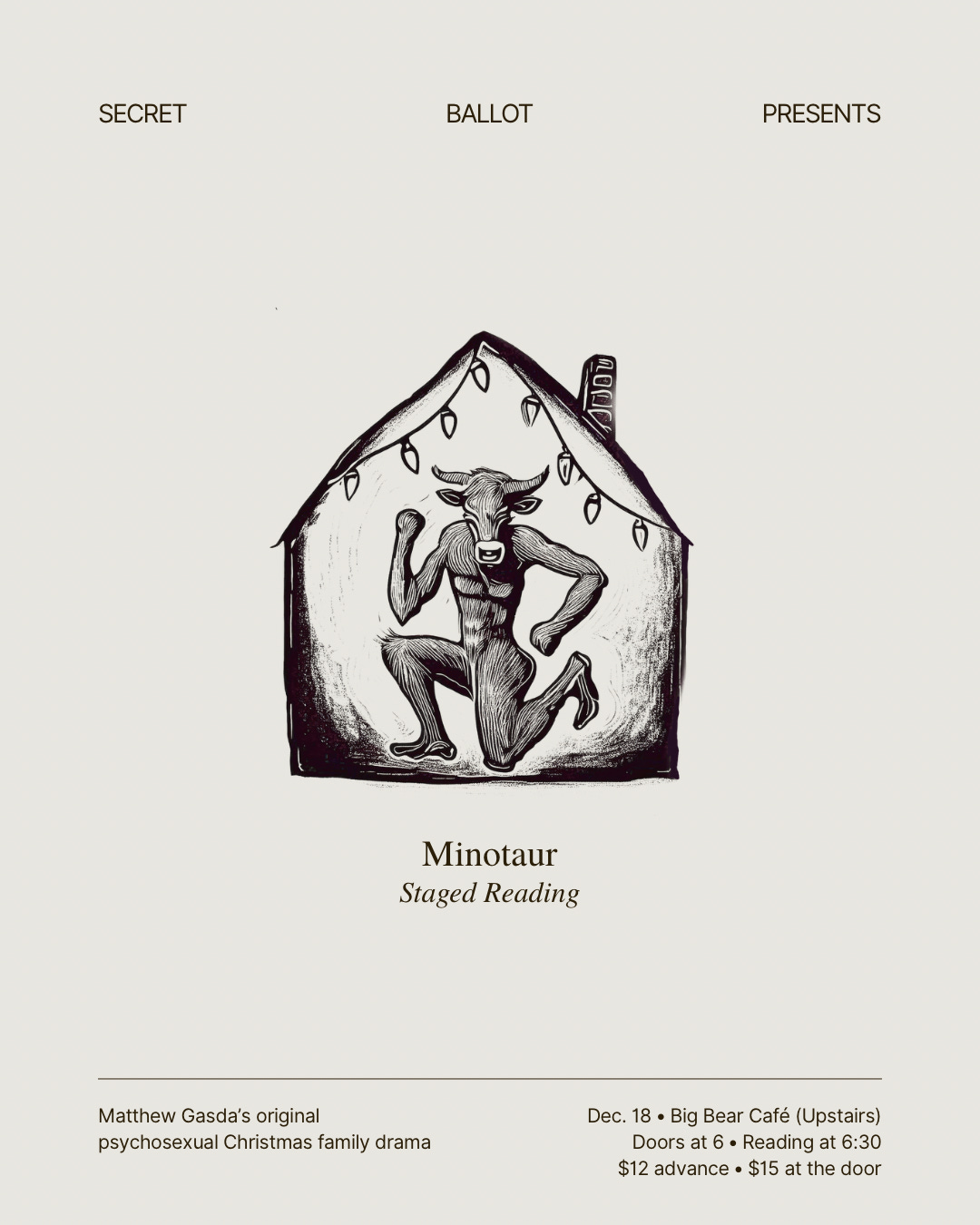
EXCLUSIVE: This month, Secret Ballot Presents opens its doors with Minotaur, Matthew Gasda’s visceral Christmas drama. As the family gathers to confront impending death, the lies that held them together begin to splinter.
We’re staging a one-night reading in the lamplit attic of Big Bear Café, starring our own Sarah Beth Spraggins and a cast of local conspirators. Come dressed to kill. Tickets.
THE VOTE:
HOT MIC:
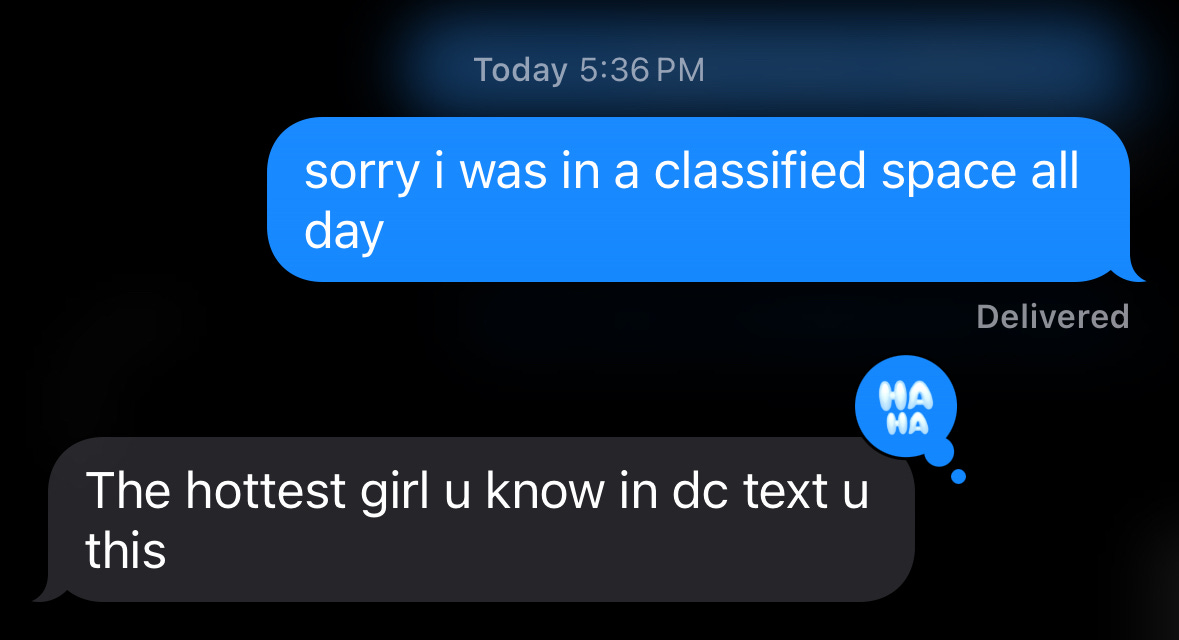

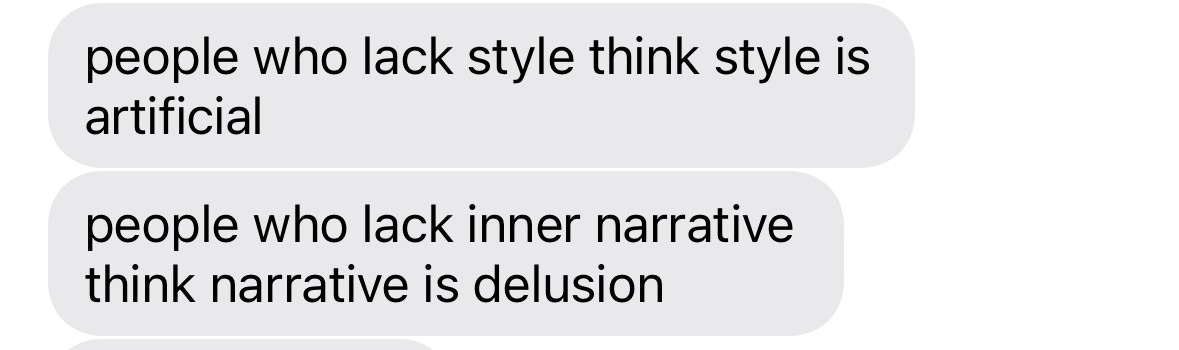
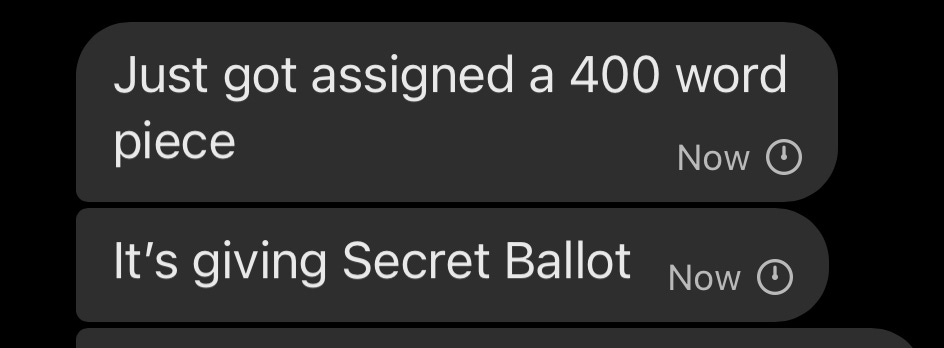
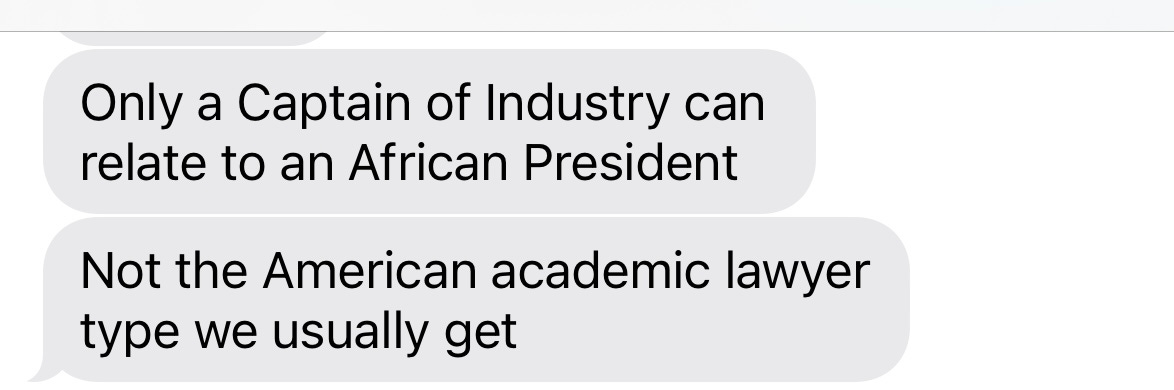
DECLASSIFIEDS:
Gossip or intelligence? We can’t tell the difference. Send us your personal ads at secretballotdc@gmail.com and we’ll post them anonymously. If you’d like to reply to one, email us the ad’s number and we’ll discreetly forward it on.
Audrey Horne’s famous annual Men’s Gift Guide is dropping SOON! This year, she maps the contours of male desire through the testimonies of dozens of genuinely fascinating men. Have a recommendation for the list? Send it directly to credenzaclear@gmail.com. A women’s gift guide will follow — just in time for Valentine’s Day.
Cockburn will come to your Christmas party!
The elusive British gossip columnist, known as Cockburn, is America-bound this Christmas as he awaits updates on his immigration status. Send him your holiday party offers in Washington, New York, and beyond by emailing cockburn@thespectator.com. And subscribe to his Substack… word on the street is he has a lot of good stuff in store for us this Winter.
Holidays! We are soliciting Holiday-related experiences for our December issue of Secret Valentine. Tell us about your work holiday parties, Santa sightings, and other tales of the season. Send them to us at secretballotdc@gmail.com with “Holidays” in the e-mail title.
THE TALLY:
The Kickoff- Road to FIFA World Cup 2026, hosted by the Washington Post and OneFootball, took place at The Ned on Wednesday. Two winners from previous World Cup winners were on the panel, as well as Congresswoman Salazar from Miami, one of the cities that will host World Cup games this coming year. The quote of the evening: “Football is the beautiful game of the world. America is about to see how amazing this game is. This is a very different animal.” Sarah Beth came away from the event compelled to get really into soccer. Read our issue of Secret Valentine from last week on SPORTS.
Situation (Chat)Room- We opened up the Substack chat for paid subscribers at the prompting of one tapped-in, 24-year-old Balloter. Our hero! Now, after we post each newsletter, we’ll host a discussion on the subject of that week’s issue. As well as impromptu discussions about anything we think the Secret Ballot readership might want to talk about.
Snow Day - Today, we saw a flurry of snow come down the moment we looked out the window. We woke up to both the real thing and several photos on social media and in our text messages. Nothing like the first day of snow on December 5 when you’re putting out your “Sign or Symbol” newsletter.
