
Romance or Romanticism
Secret Ballot x Romanticon featuring Paul Franz, Matthew Gasda, and Anthony Galluzzo


For this week’s Valentine’s Day issue, we collaborated with our friends at Romanticon, a literary Substack devoted to the revival of romanticism.
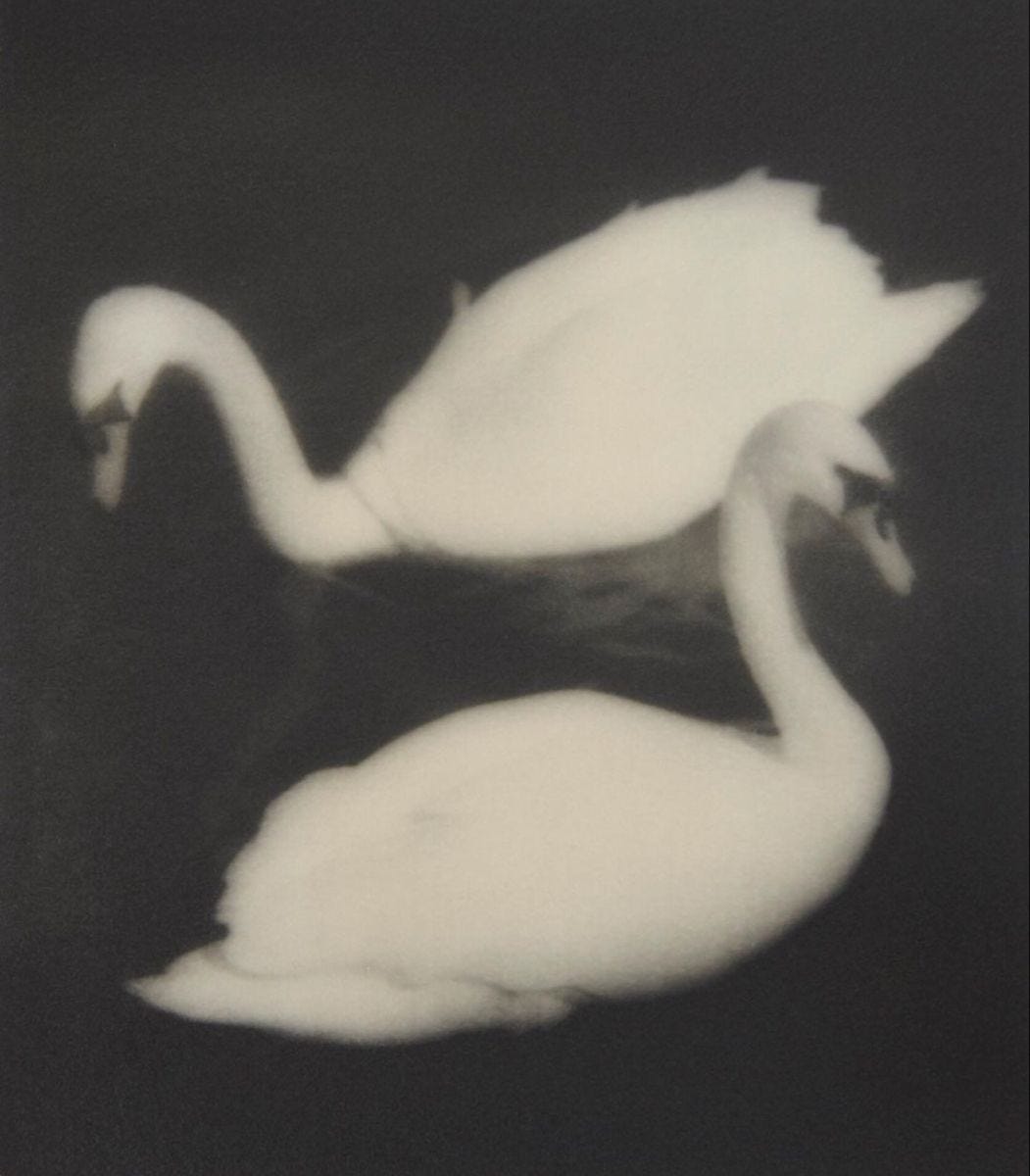
The Thought: Excerpt from Icarus in Alaska
Anthony Galluzzo
When I was 24, a sudden and unexpected loss made me half-mad with grief before driving me north to an Arctic corner of Alaska. My madness took the form of a fruitless search for consolation after the sudden and unexpected death of my ex-girlfriend S. at the age of 23. Things were unresolved with us, as I wrestled with my own guilt over past sins related to the relationship. While I lost my religion as a teenager, embracing a callow flavor of existential despair, I desperately sought evidence of life beyond life in the face of this great bereavement.
I was at least ecumenical in my seeking, at first immersing myself in UVA psychologist Ian Stevenson’s various studies of reincarnation—his research based on interviews with children the world over—before realizing that if what I sought was my lost girl, her reincarnated self, another self in every way, would not be her at all (i.e., how and why does reincarnation qualify as life beyond life, especially in Buddhist contexts that deny the reality of a substantial self—Anatman—which persists?).
I at one point revisited my childhood Catholicism, retiring to a Trappist monastery outside of South Carolina for a month: to dry out, wrestle with the God in whom I only sometimes believed, and cultivate silence. In fact, the point was to bury my despairing self in the liturgy of the hours and the manual labor on the chicken farm that supported the monastery. It only partly worked, as I too often fell back into the hole of grief I sought to escape; it wasn’t silence so much as the scarce conversation allowed us an hour each day that offered me some solace. I discovered many of the monks were veterans of various wars and had known loss of all kinds. It was also during one of these conversations that I learned about a Catholic radio station in Nome, Alaska. As my monastery stint was ending, I imagined arctic cold and dark might best suit my psychic condition, aligning inner and outer landscapes.
Nome is an Alaskan gold rush settlement that sits across the narrow Bering Strait from Siberia, known as the Ice Curtain during the Cold War. The town resembles a trailer park, for structural or climatic reasons. You can’t build foundations into the permafrost, which, even then, was beginning to buckle as it thawed: a perilous frozen desert far above the tree line.
I secured a position at a Catholic radio station through the abbot’s efforts. Unlike the Trappists, the radio station was staffed by ideologically rigid laypeople who struck various colonial poses as they “ministered” to the sometimes-inaccessible Inuit communities scattered throughout the Seward peninsula where Nome is located. Although I was, at that point, humbled by grief, my contrarian streak endured—for instance, when I referred to God as a “She” during one broadcast. I subsequently managed to land a job at the local newspaper, bringing my short stint at the station, and concurrent flirtation with my childhood Catholicism, to a close.
It was in the long arctic dark that I finally dispensed with the fantasy of finding some surefire evidence of individual immortality, accepting both the fact of finitude and S’s passing—so long after I’d given up on Kübler-Ross’s five stage program—while coming to some inchoate understanding of life after death as the persistence of the dead within the living.
I had a quasi-occult revelation during a wild night that started early one dark day in late autumn. I was drowning in the midday murk by Halloween. The long darkness descends by noon so far north, after a brief sunrise oddly crepuscular in its half light. I was also drowning in alcoholic self-medication, which usually began with a White Russian alongside my morning coffee. My abortive plans for going dry aside, I was certainly not alone in this (mal) adaptive response to an inhumane climate. This is a town of a few thousand people that boasts something like eight churches and nine bars.
I was hunched over a beer in the town’s nicest bar: a well-lit hovel which the town’s then-mayor—also vice-president of the Alaska gold company—called his “office.” Mayor Goldmine half drunkenly ruptured a depressive reverie when he offered to buy me another drink I didn’t need before slurring through his family history. He was a descendant of the first settlers who came to the place during the Alaska Gold Rush—Norwegian fortune hunters who found what they were looking for, then established a roughhewn dynasty on the backs of the Inuit. The story of America in miniature, I thought, but not for so long that my mind didn’t drift back to my own mourning. I let him take me to the gold mining company headquarters in a large snowmobile.
“Do you want to see a really big fucking chunk of gold?” he muttered in his office before heaving a gaudy baseball-sized block of the stuff at me. He barely missed, as I briefly thought about grabbing the rock we deem wealth and running away into the frozen night: more suicide wish than heist fantasy at the time.
“Going outside for a minute,” I slurred.
It was several degrees below zero as I vomited onto the permafrost beneath the prismatic shimmer of the northern lights marbling the clear blue night sky, girdling what appeared, in my disordered state, a mocking circus of constellations.
Anthony Galluzzo writes for Romanticon. Read the full version of his piece here.
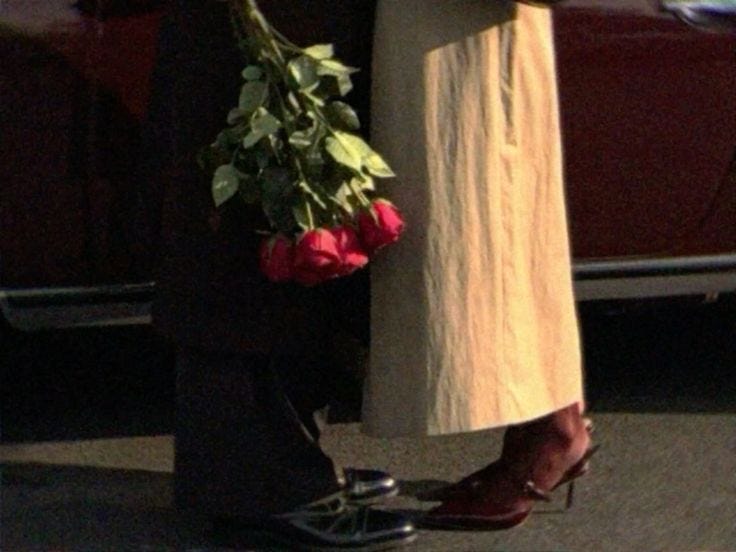
The Afterthought: Prettiness
Sarah Beth Spraggins
On my birthday, I eat a chocolate croissant in bed and walk about five minutes from my apartment to the Phillips Collection. My favorite part of the museum is an installation with a single lightbulb, hanging in a small room with walls covered floor to ceiling with beeswax. It has an earthy smell, somewhere between chamomile and peanut butter. It is beautiful and strange, but it is not pretty.
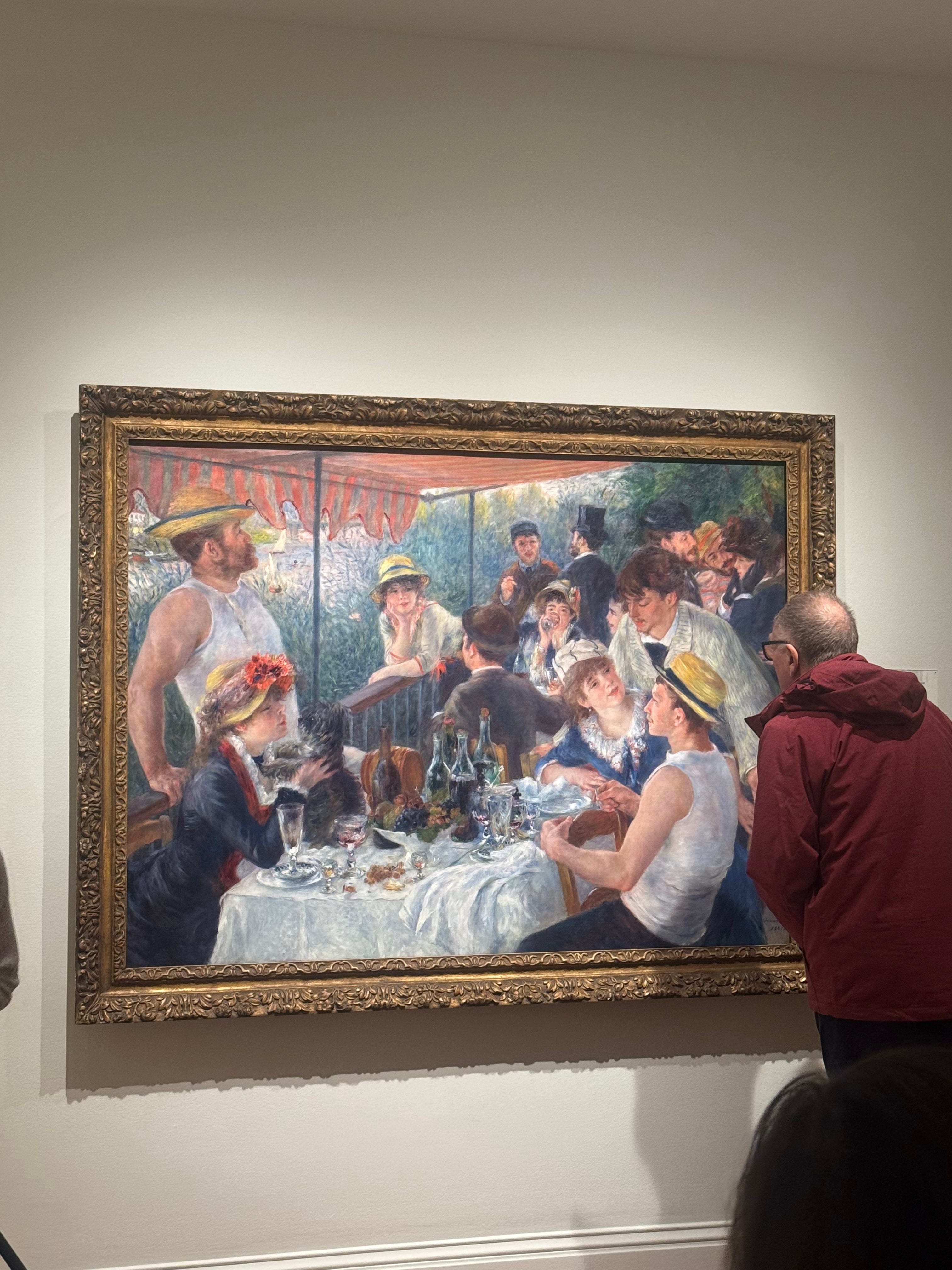
When we go to see the huge, famous Renoir painting, Luncheon of the Boating Party, a woman gives a fifteen minute presentation. She leads us through a 45 second look at the painting, several times longer than most museum-goers will stare at a piece of art. She reminds us to stand evenly across both feet and breathe.
I usually hold my breath while looking at paintings so this time is different. I am struck by the obvious class strata, the girls looking thirsty and the men looking coy, and the gazes darting around (a girl looks at a man, that same man looks at a different man etc.) which give the painting a distinct sense of centripetal motion. The painting includes real people Renoir knew, many of whom show up in other paintings by the impressionists. This restaurant is the place where they would hang out, in the aftermath of a traumatic period for France, finally able to relax by taking the train from Paris during the newly-invented weekend.
Impressionism is always pretty. So pretty I used to ignore the paintings in museums. The way people say Coldplay is music written for an Apple commercial, I thought these kinds of pastel landscapes were painted for dorm room posters. But the big Renoir at Phillips is impossible to look away from. Beauty in its most obvious form is an invitation to surrender.
After leaving the museum, we drive out to Virginia—our own version of a weekend journey to the country. The Potomac river is made of ice crackling apart in the sun. We listen to A Rush of Blood to the Head, an album I associate with my Gen X father cooking chicken with mustard in an apron. I get a new birthday perfume. It is pretty. This is its main appeal. Named Little Flower, it is the platonic ideal of a perfume. The idea is borrowed, unoriginal, well-executed, intoxicating, just like all good things in life.
Even if I think I want to experience what is in front of me, it can be a struggle to find a way into my own boat parties, eye contact, breezes, weekends, and industrial revolutions. Breathing and stillness help. I couldn’t really see the big painting without a woman with an art history degree, a scarf, and silky voice pulling me into its perfect weather and mysteries. Who is that woman in the top left, covering her ears? Something has to hold me there and in the case of this painting it is the colors, which are delicious on purpose. They look like sorbet.
I am told that the Boating Party will be traveling soon, for the first time in decades, to spend a few months at the Musée d’Orsay. It will stay there until the late summer, and when it returns, it will bring with it another artwork as a permanent gift from the Parisians.
Sarah Beth Spraggins co-edits Secret Ballot and is Audience Editor at The Spectator.
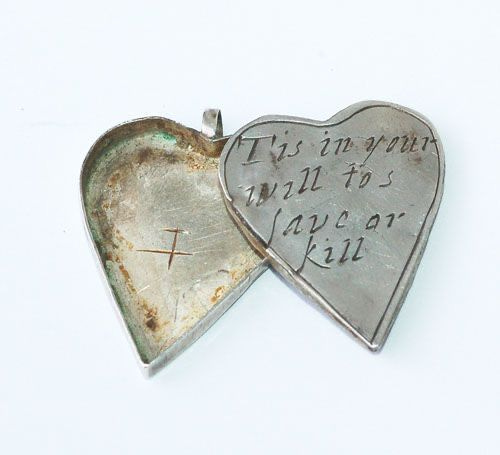
The Find: As I Walked Out One Evening and A Thing Created Stationary
Recommended by Audrey Horne
Declarations of romantic love — poems, letters, texts etc. — have always embarrassed me. I feel shy reading them, or pressured, like I’m supposed to respond a certain way. It’s not that I’m not a romantic (I am!) but love exists more fully to me in deeds and in pauses than it does in language, which can never capture its depth. It feels presumptuous to even try.
If I had to choose a poem that comes closest to my view of love, though, it would be W.H. Auden’s As I Walked Out One Evening. I like the clear-eyed love he describes, anchored and muddied by the earth, but reaching as hard as it can toward heaven.
And if I were to write love poems myself, they would be funny in form and romantic in function, penned the old-fashioned way on beautiful watercolor stationary. I’m partial this season to Friend of the Ballot Erisha’s Frenchie Cranberry style for every day, and these pink champagne cards for special occasions.
Audrey Horne is a romantic pragmatist, or a pragmatic romantic. Whatever you fancy.
The Feeling: Winter Carnival
Paul Franz
The Winter Carnival in Quebec City ends the day after Valentine’s, and we went there the week after the Carnival: the dead season, the low ebb, when a room at the Château Frontenac could be had on the cheap. Bitter winter still, at that latitude. Night nearly all the time, especially for us late-rising weekenders. Yet everything quaint, magic, mysterious, and the few daylight hours the same. Valentine’s Day is a confected holiday, so skeptics say, the Château Frontenac a glorified railroad hotel. Timid souls, who let nothing disturb their even keel.
Anyway, everything’s vertical in this town: turrets, funicular, heights, the waterfall (frozen) that I visited still foolishly shod in my grad student Doc Martens whose steel toe, sympathetic with the elements, turned my feet to ice-blocks. Dizzying heights in the old city where you round a corner and look down on roofs two hundred feet down. The concession to tourists here the absence of concession—no guardrails—as if to teach you that love means risk, yet, if you’d make it last, risk held within control. The reward the plunge down the ice-luge from the Château balcony, transforming the hotel bar to après-ski. Nights, in the deepest depths of the coziest bars, the Québécois passion for raw beef—for tartary of every variety—could be indulged with zest: hot life cooled and refashioned and yielding itself to the tongue. (Another parable of love: to brave winter’s knife and be restored by fire and the inspiriting tang of blood—prepared for by, because why not, another huit huîtres.)
Quebec City must have been what sealed the deal for us. An old love has the dubious fortune of being its own archetype. Early love, first love. The frozen waterfall too apt to become metaphoric. That’s why you need a new-old city—crystalline, filigreed, fantastical; a diamond of ice and salt; encrusted with salt to the second floor; salt vaporized and astringent yet turning everything soothingly dove-gray—to give birth to old-new loves. The winter has darkness and secrets left in her yet. We’ll have to go there again this year.
Paul Franz edits Literary Imagination and Romanticon and writes the Substack newsletter Ashes and Sparks. He is at work on new poems and short stories.
The Bluff: Excerpt from Over the Moon
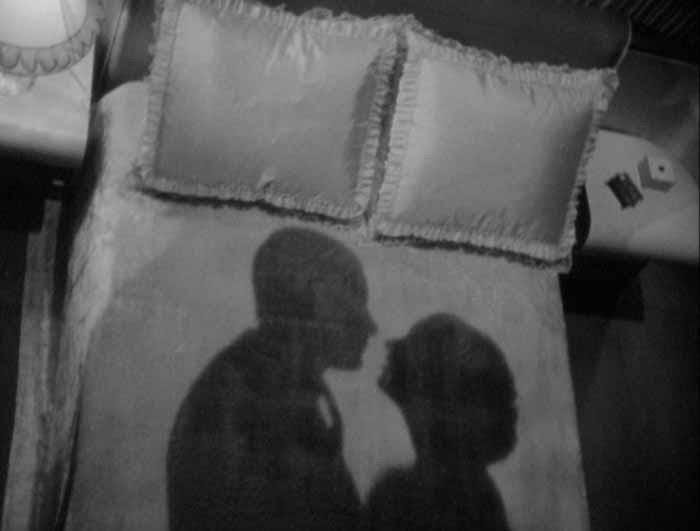
This speech of Eden’s, from the end of Over the Moon, I wrote in about 5 minutes, after, or a midst, a breakup that promised to heal but never did; it's a kind of projection of what I wish someone told me; what I think people should tell each other; there's a world in which someone does.
EDEN But I see myself... I mean when my grandmother died a few years ago... my grandfather was there... like there-there... and in a way I think he let her die first because that was the bravest thing... which I only realized when I watched him die without her... and I’m gonna need to let someone be brave enough to let me die first when we’re very very old... and I think that’s probably you... and even though you’re the biggest dick I’ve ever met, honestly... you’re very brave... and that’s the thing that matters most to me... someone whose brave and who is smart enough to that I know that it’s not dumb bravery but smart bravery... the kind that matters most...
EZRA Can I sit closer?
Matthew Gasda is a writer and director, founder of the Center for Theater Research and co-founder of Romanticon.
The illustrious Peter Suderman of cocktail Substack fame created our Secret Valentine cocktail menu, including a drink with campari, sweet vermouth, and soda called Cupid’s Bow, a raspberry lemonade punch called Sweet Nothing, a champagne cocktail called Sparkling Wit, and a rum drink with lemon and black tea aka The Matchmaker— sweet drinks are in! They always were, just like love, but some of us needed to be reminded. Thank you, Peter.
And thank you to our friends at Right Proper Brewing for the beer!
The Vote:
Hot Mic:
The Tally:
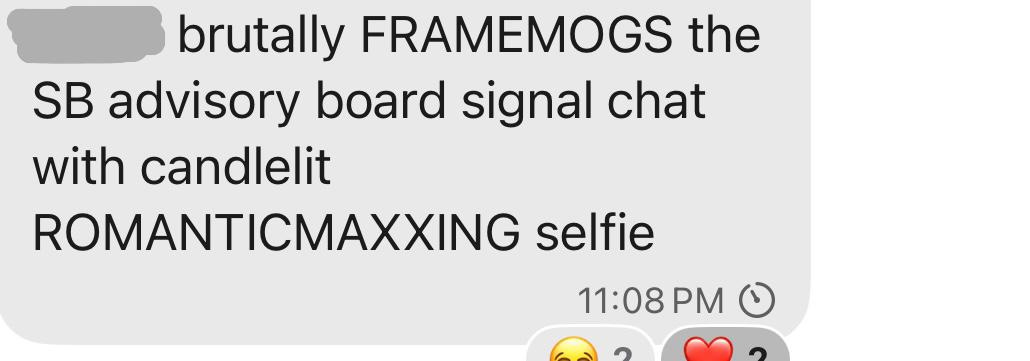
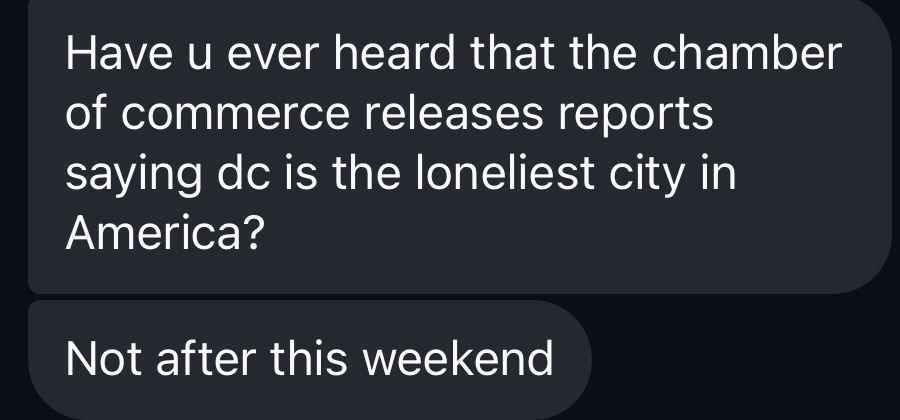
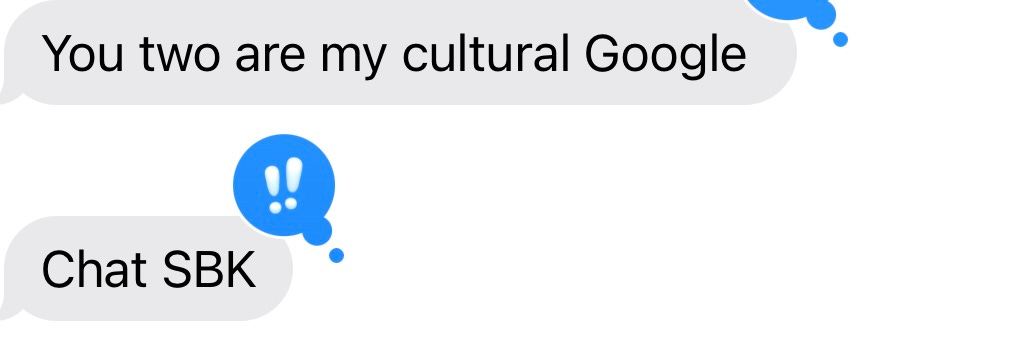
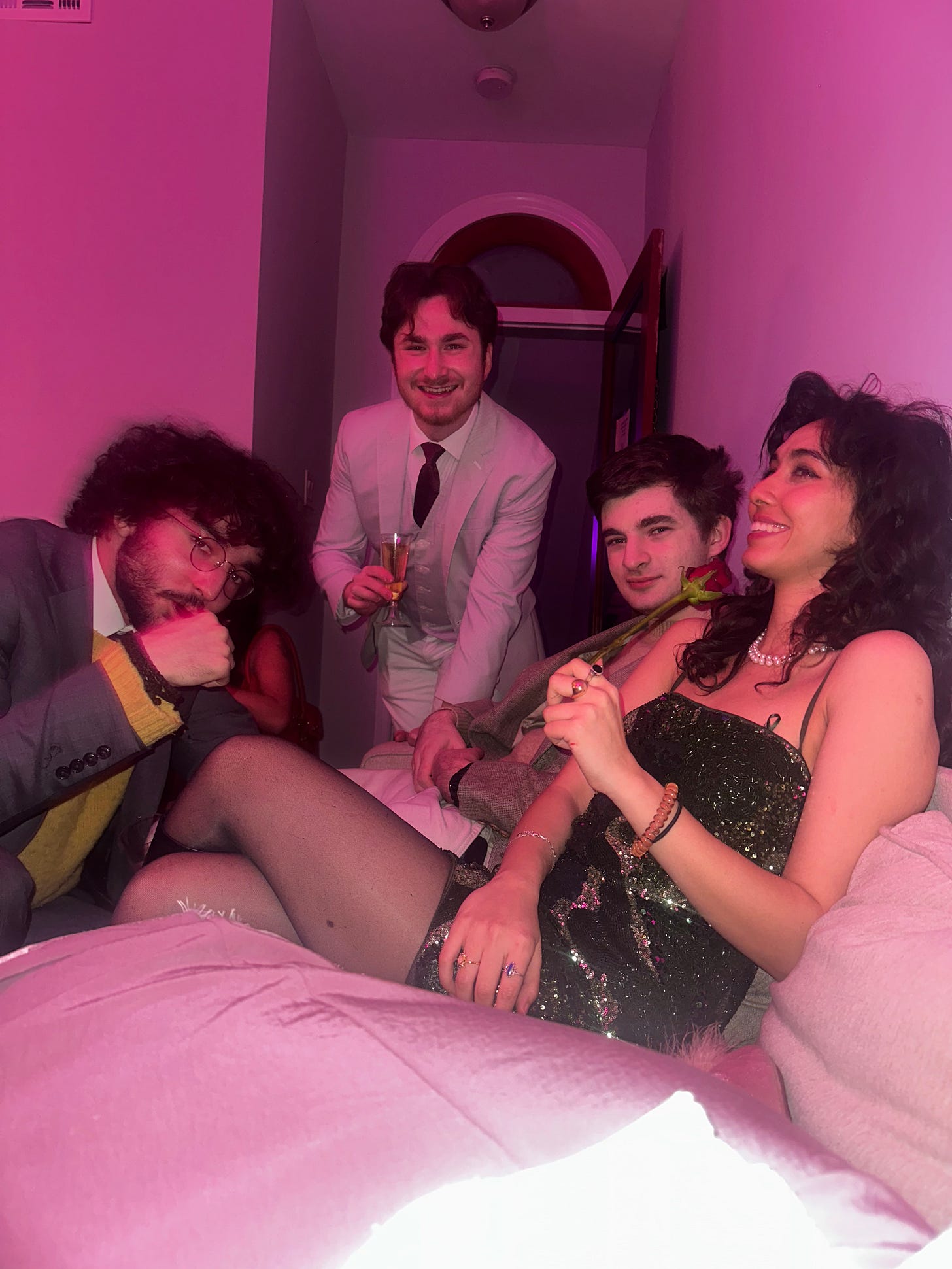
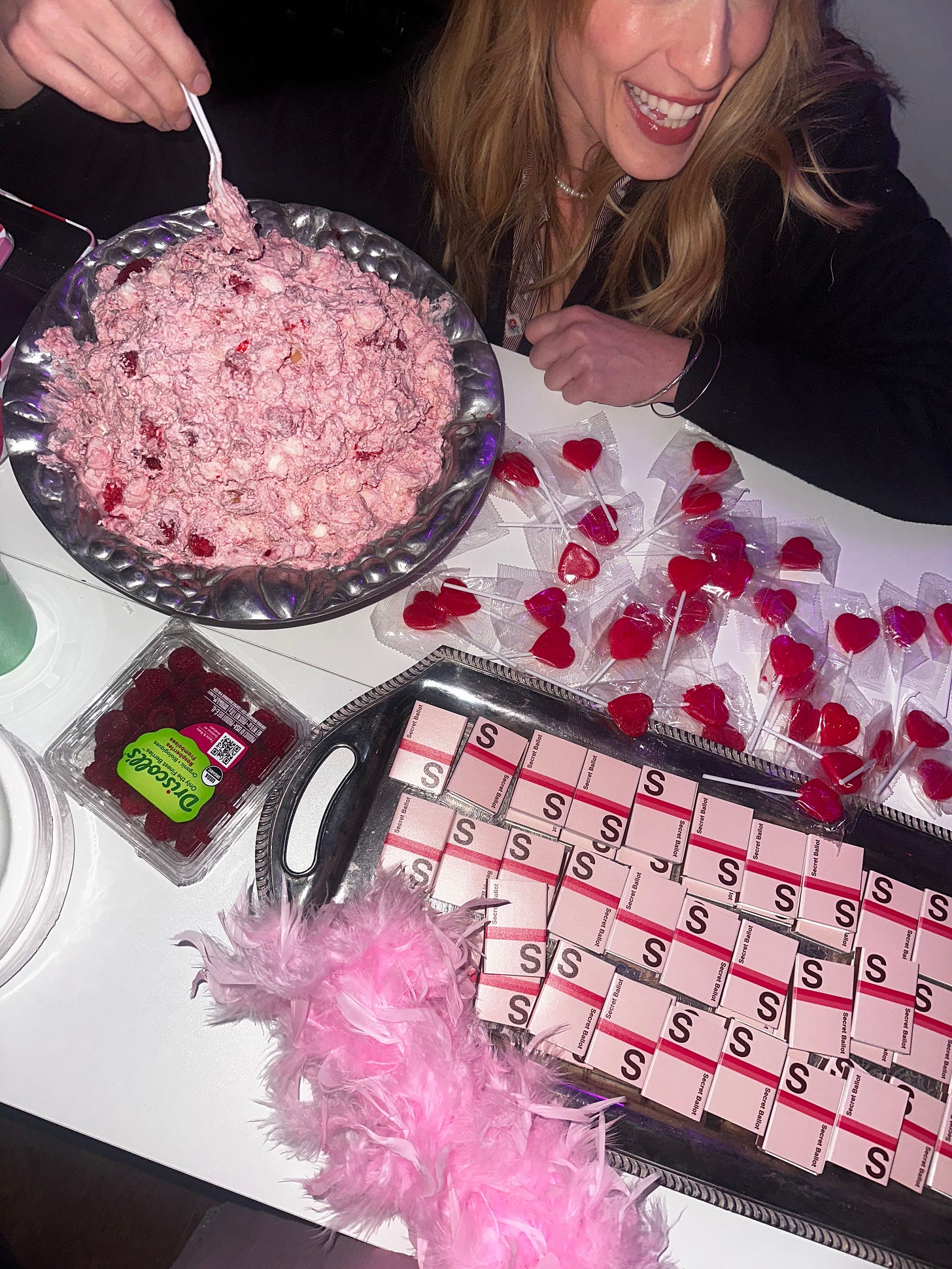
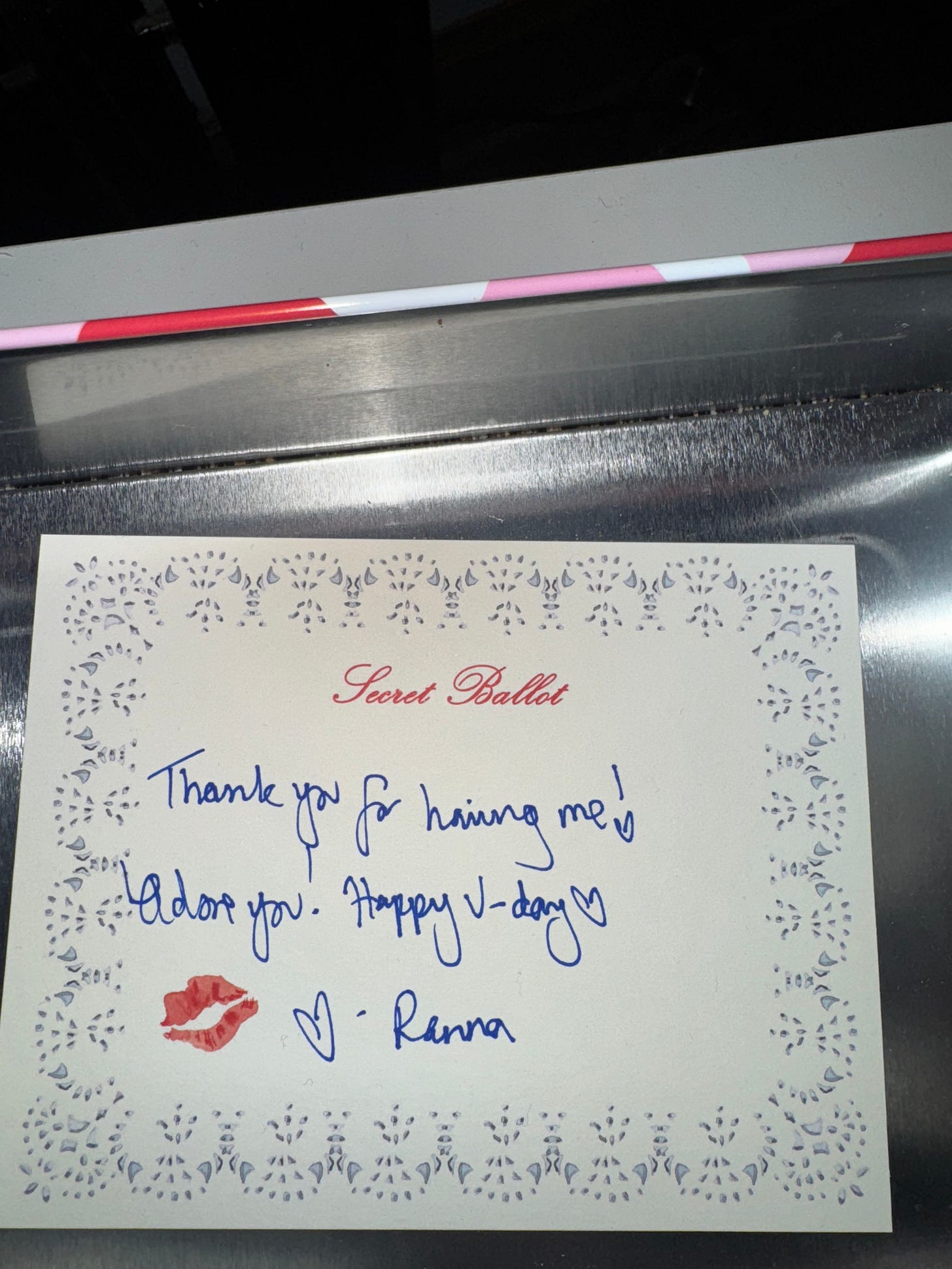
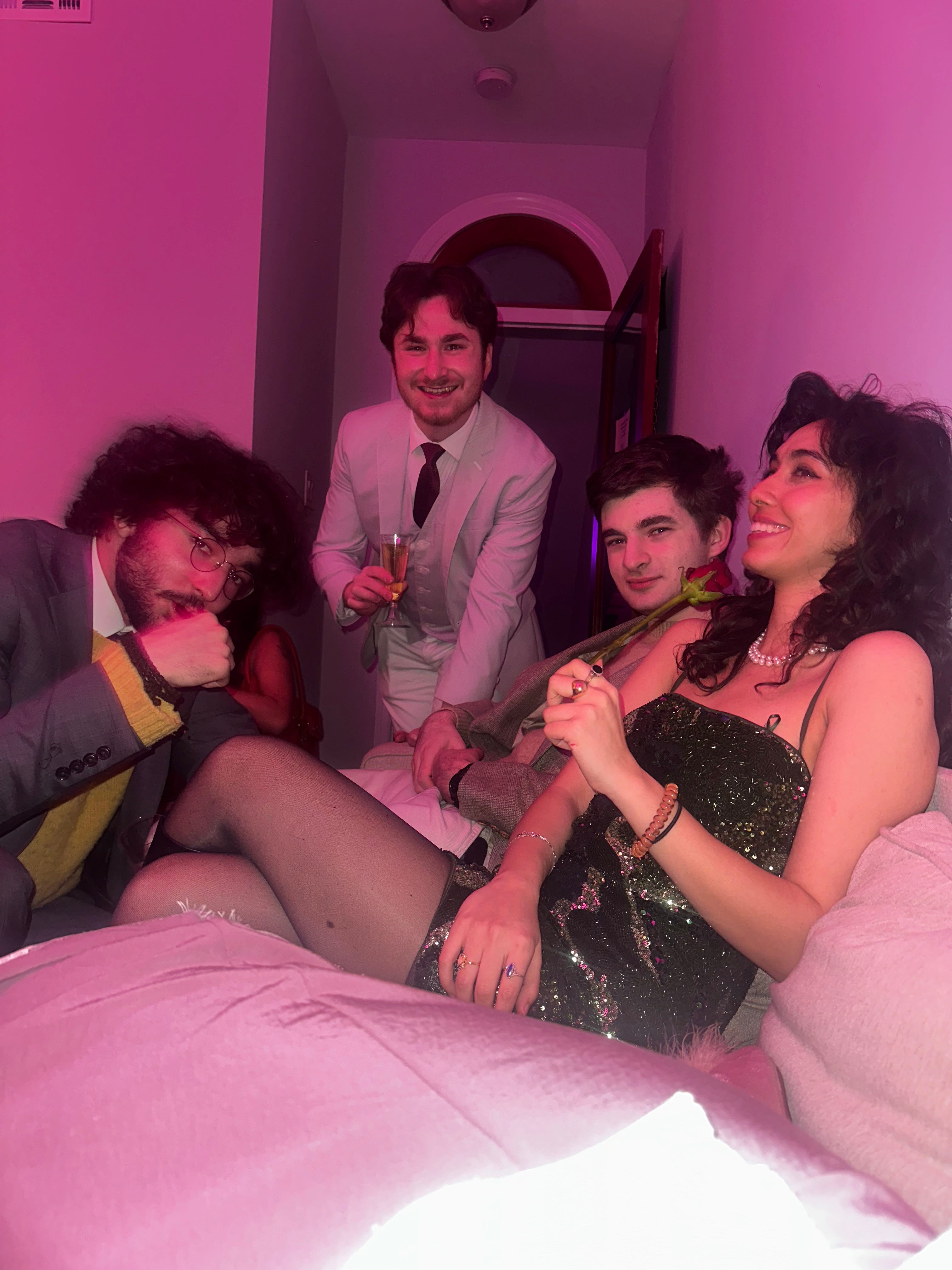
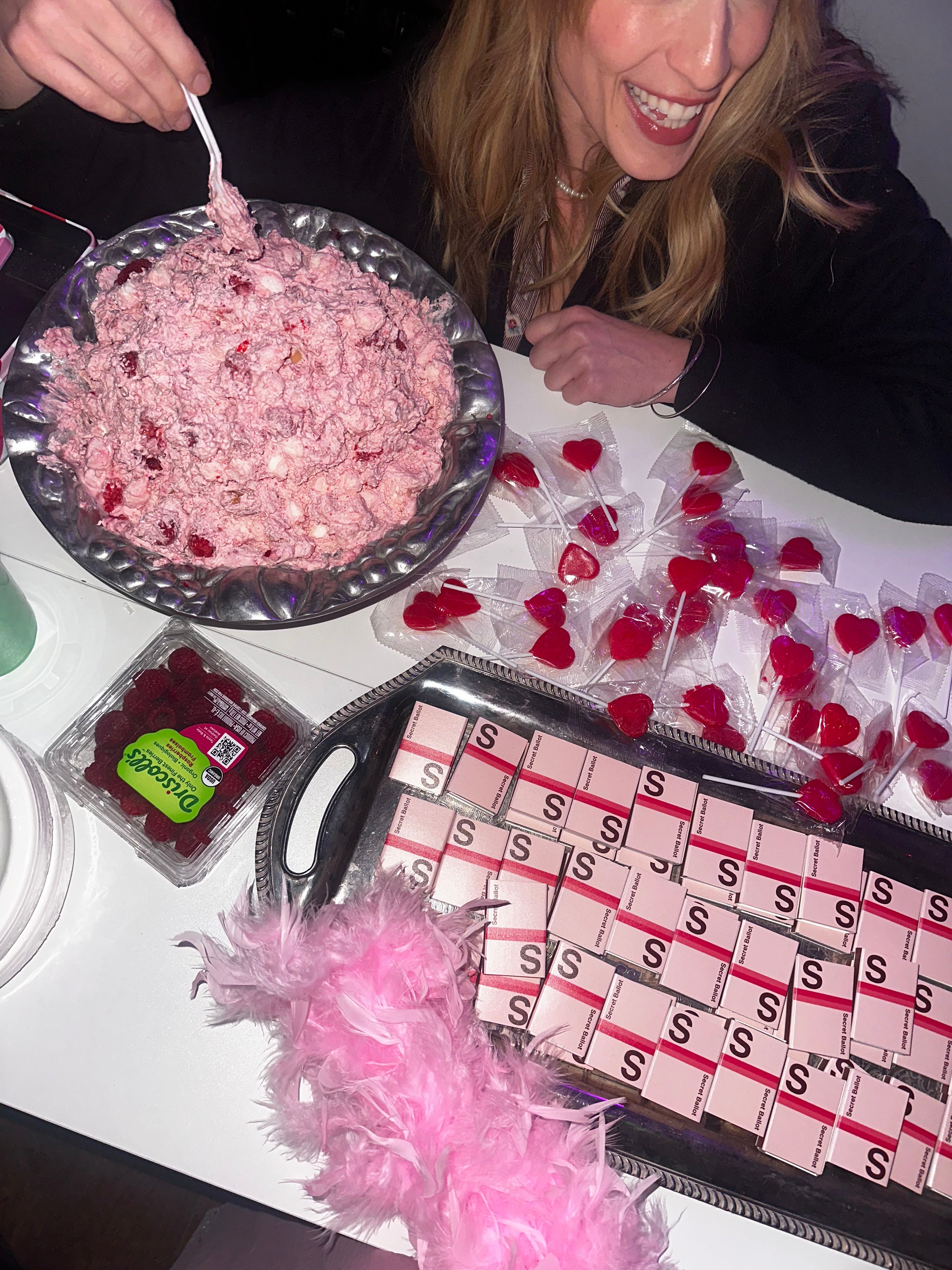
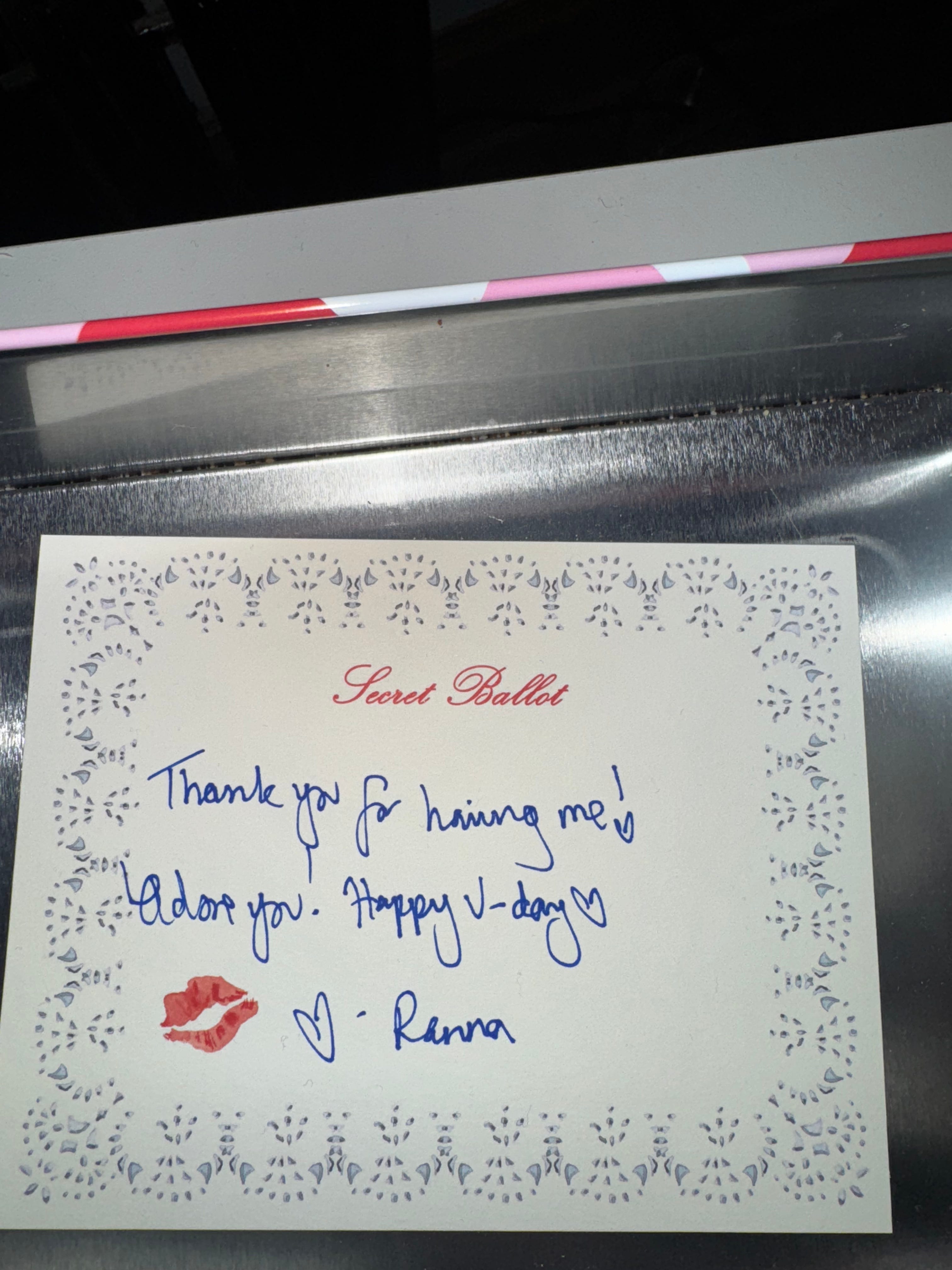
Kiss me! Last night’s Secret Valentine party was, according to all the guests who texted us this morning, Secret Ballot’s best party yet. We downed the punch, played Twister, flirted, and hosted a speed dating game emceed by a very mysterious man in black. There was, as always, a midcentury dessert—this time, a heaping bowl of raspberry fluff. Our cocktail connoisseur watched over proudly as the youngsters bartended. The genders reconciled, the people voted in a whiteboard game of French/Marry/Ditch, and characters from DC’s various tribes and territories mixed together happily. More photo evidence to come but here are a few taken on our iPhones.

The Walk for Peace monks completed their 2,300 mile from Fort Worth to Washington, DC on the warmest day, thus far, in 2026. Their mission was to tangibly remind Americans that peace begins within the heart. The robed monks and their ever-growing crowd of fellow walkers enveloped the Hill, as the sun melted the Capitol reflecting pool. Their DC stops included interfaith engagement at key churches, stops at the Peace Monument and Lincoln Memorial, and a public mediation session at GWU.

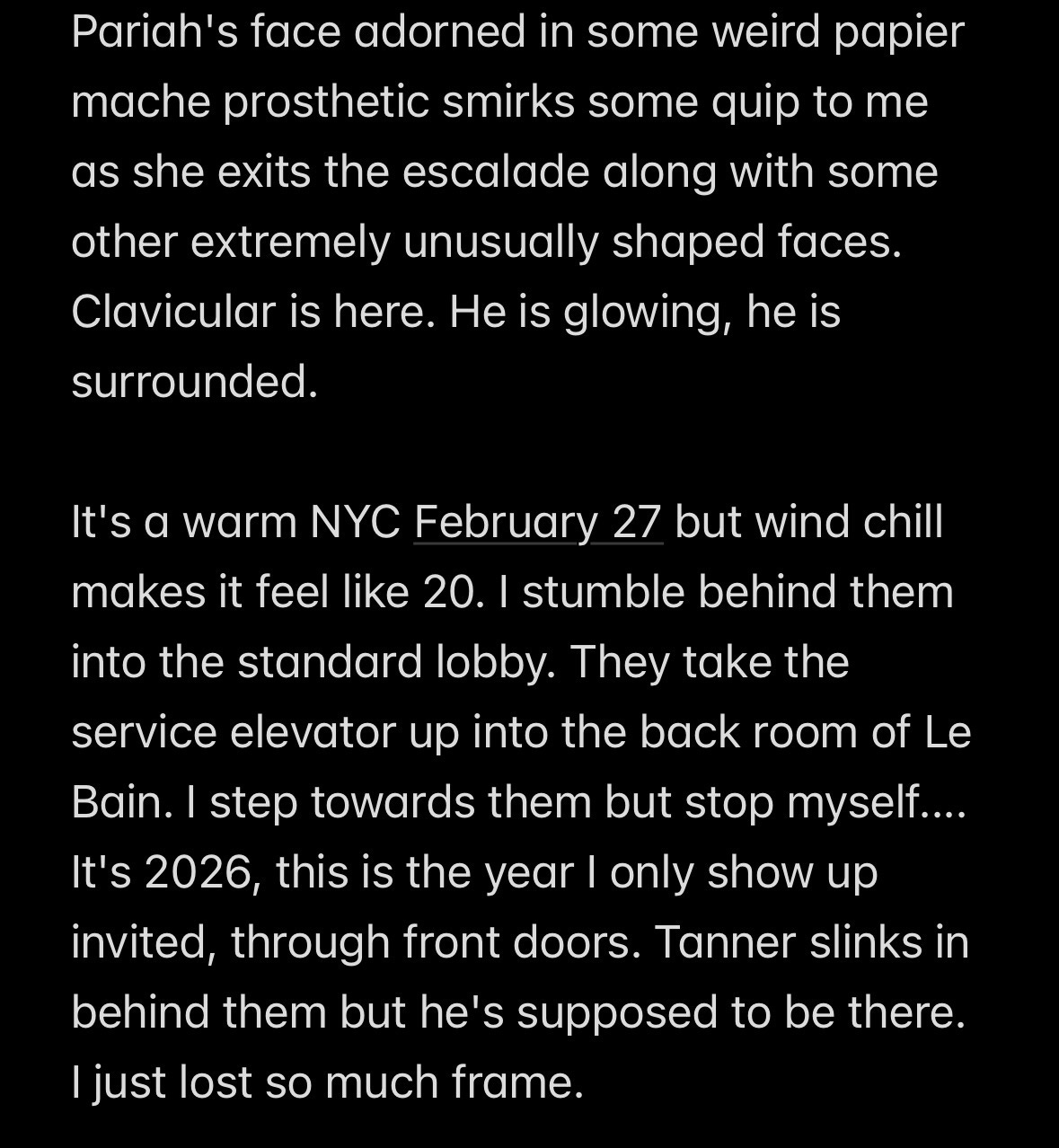
Speaking of walking, Clavicular (read Hot or Not) took the runway at the Elena Velez show Thursday evening. Our New York liaison sent in this report:
Don’t Miss:
Secret Ballot is planning an early spring reading with The Republic of Letters substack for subscribers. Stay tuned for more information about this and bookclub announcements.
Utter Goodness, a new short story collection by Audrey Lee, will host its launch party CAPITOL LETTERS on Sunday, February 22nd at Butterworth’s in Capitol Hill. Will Ballard, Editor-in-Chief of Farthest Heaven, will moderate a panel on new America writing with Audrey, Tom Will (author of American Cats are in a Big City), and special guests of the press. The event starts at 7PM. Entry is free, a cash bar will be available, light appetizers will be provided by Butterworth’s, and books will be available for purchase and signing.
DC-based startup JotPsych seeks to hire a short-form video expert to help with their ad content on a contract basis. Details here.
Gossip or intelligence? We can’t tell the difference. Send your scoops and events to secretballotdc@gmail.com and we’ll post them anonymously.

 | A guest post by
|